EMG Testing: A Patient's Guide
Summary: This article explains electromyography (EMG) testing, a diagnostic procedure used to assess nerve and muscle function. Readers will learn what EMG testing involves, why it may be recommended, which conditions it can help diagnose, how long the test takes, and what to expect in terms of pain, preparation, and side effects. Safety considerations are also highlighted, including EMG use in people with pacemakers, blood thinners, or joint replacement implants.
In this article:
What is EMG testing?
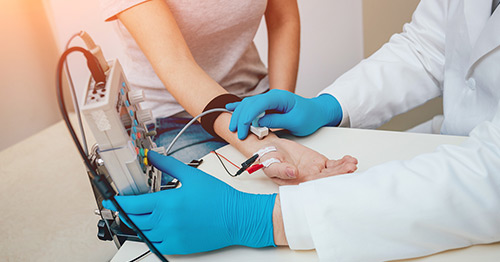
Electromyography (EMG) is a form of electrodiagnostic testing that is used to study nerve and muscle function. It is commonly performed by a physiatrist or neurologist with special training for this procedure. An EMG nerve test can provide your doctor with specific information about the extent of nerve and/or muscle injury and can also determine the exact location of injury and give some indication whether the damage is reversible.
There are actually two parts to EMG:
- Nerve conduction study – The nerves are stimulated at different points with small electric shocks, artificially activating them so their function can be measured.
- Needle exam for muscle testing – Very fine needles are inserted into several muscles. Each needle has a microscopic electrode that picks up both the normal and abnormal electrical signals given off by a muscle.
In most cases, your doctor will perform both elements, but in some situations, only one or the other may be done. (Find a doctor at HSS who performs EMG testing.)
What is an EMG test used to diagnose?
Conditions that EMG testing helps diagnose include:
- carpal tunnel syndrome
- pinched nerve
- radiculopathy
- sciatica
- neuropathies
- muscle diseases
- muscular dystrophy
- ALS (formerly known as Lou Gehrig’s disease)
- myasthenia gravis
Why does my doctor want me to have an EMG test?
Your doctor may order an EMG test if you experience any of the following symptoms:
- numbness
- decreased sensation
- tingling or frequent feeling of "pins and needles"
- radiating pain or burning sensation
- muscle spasms or weakness
- difficulty performing daily tasks such as walking, buttoning clothes or handling objects
How long does an EMG test take?
EMG testing usually takes anywhere from 30 to 90 minutes, depending on the condition being tested and findings of the study. A report that includes the results and an interpretation will be sent to your doctor.
Is an EMG test painful?
EMG testing may result in some discomfort, but it is usually well tolerated without any need for pain medication.
What you should know before an EMG test?
EMG testing is extremely safe, but talk with your doctor if you take blood thinners, have a pacemaker or implanted defibrillator before having the test. No special preparation is needed for people who have a hip, knee or other joint replacement prosthesis.
- If you are taking anticoagulation medications (blood thinners) or have a pacemaker or implanted defibrillator, you should notify their doctor before having the test. In general, these conditions will not create any complications and you can have an EMG test safely.
- Unlike preparing for dental procedures or certain types of surgeries by taking antibiotics, no special preparation is necessary in those patients who have a joint replacement or other artificial implant in their body.
- You should take any medications your normally take on the day of the test.
An EMG test is very safe. EMG needles are used for only one patient, are not recycled, and are immediately disposed of following use.
What are the side effects of EMG testing?
Side effects of an EMG test may include some muscle soreness, but this rarely lasts more than an hour or two after the exam.
Video: Electrodiagnostic exam
Key takeaways
- EMG testing (electromyography) evaluates nerve and muscle function to locate and assess the severity of injuries or diseases.
- EMG testing has two main components:
- Nerve conduction study – measures how nerves respond to small electrical stimuli.
- Needle exam – uses fine needles with electrodes to detect electrical activity in muscles.
- EMG can help diagnose conditions such as carpal tunnel syndrome, sciatica, pinched nerves, neuropathies, muscular dystrophy, ALS, and myasthenia gravis.
- Common reasons for EMG testing include numbness, tingling, radiating pain, muscle weakness, or difficulty performing daily activities.
- The procedure typically takes 30 to 90 minutes, and results are sent to the ordering physician.
- Discomfort is possible, but EMG is usually well tolerated without medication.
- EMG is extremely safe, including for patients with joint replacements, pacemakers, or those taking blood thinners.
- Side effects are minimal, usually limited to brief muscle soreness lasting an hour or two after the test.
- EMG needles are single-use and immediately disposed of, minimizing any risk of infection.